UK Gambling Commission Unveils Q3 2025/26 Data: Online GGY Dips 2% to £1.5 Billion Amid Slots Stake Limits
Willa Frank · Mar 11, 2026

UK Gambling Commission Unveils Q3 2025/26 Data: Online GGY Dips 2% to £1.5 Billion Amid Slots Stake Limits
The Latest Operator Data Drop from the Gambling Commission
The UK Gambling Commission just released its quarterly operator-submitted data covering gambling activity right up to December 2025, marking the third quarter of the 2025/26 financial year; figures reveal a notable 2% year-on-year decrease in online Gross Gambling Yield (GGY) landing at £1.5 billion, a shift largely tied to the fresh online slots stake limits that operators rolled out back in April and May 2025. Operators submitted these stats as part of ongoing monitoring efforts, providing a clear snapshot of how the market's adapting—or not—to regulatory changes that hit just months earlier.
What's interesting here is how the data captures the immediate ripple effects from those stake caps, which aimed to curb potential harms while the industry adjusts its operations; total online GGY, encompassing everything from slots to betting, reflects this pullback, yet certain segments bucked the trend in intriguing ways. And as March 2026 rolls around with regulators eyeing the next quarterly update, these numbers set the stage for what's next in a landscape still feeling the pinch.
Online Slots Take Center Stage: Record Spins but Fewer Long Sessions
Slots GGY climbed 10% year-on-year to £788 million despite the broader online dip, fueled by what data calls record-high spins across platforms; operators reported this uptick even as sessions stretching over one hour dropped a sharp 16%, suggesting players engaged more frequently but for shorter bursts—perhaps dodging the new stake restrictions that cap bets at £5 for most users, or £2 for under-25s. Turns out, the volume of activity ramped up, with spins hitting peaks not seen before, while prolonged play took a hit, aligning with the Commission's goals to reduce session times linked to higher risks.
But here's the thing: this resilience in slots revenue comes amid those enforced limits, which kicked in mid-spring 2025, prompting operators to tweak games and promotions; figures indicate players shifted behaviors quickly, spinning more but cashing out sooner, a pattern experts tracking the data have observed in early post-limit quarters. One might notice how this balances out the overall online GGY decline, keeping slots as the heavyweight category they remain.
Real Event Betting Feels the Biggest Squeeze
Real event betting GGY plunged 18% to £530 million, the steepest fall among major categories, as punters dialed back wagers on sports and other live-action outcomes; this downturn contrasts sharply with slots' gains, highlighting how different verticals respond to the same regulatory environment, where stake limits primarily targeted slots but indirectly influenced broader online habits. Data shows session numbers held somewhat steady, yet yield per session eroded, possibly because major events like football seasons or racing meets didn't deliver the volume to offset cautionary play.
Observers note this 18% drop as particularly telling, since real event betting often drives seasonal spikes; with Q3 spanning late autumn into winter 2025—prime time for Premier League action and holiday punting—these figures underscore a market pulling in its horns, even without direct caps on those bets. adn while March 2026 brings the tail end of another sports calendar, upcoming data could reveal if this trend persists or rebounds with spring fixtures.
Betting Premises GGY Down 7%: Offline Shifts in Focus
Shifting to physical venues, betting premises GGY fell 7% year-on-year to £549 million, reflecting softer footfall or lower stakes in shops across the UK; this offline segment, less directly impacted by online stake rules, still showed contraction, perhaps as some activity migrated digitally or players simply spent less amid economic pressures lingering into late 2025. Operators' reports detail fewer visits coupled with moderated bet sizes, painting a picture of cautious land-based punters who once fueled high-street vibrancy.
It's noteworthy that premises held up better than some online categories, with total GGY nearly matching slots' online haul; data breaks this down by region too, though aggregates point to a steady erosion rather than a cliff-edge drop. Those who've studied prior quarters know premises often lag online trends, yet this 7% slip signals broader behavioral tweaks across channels.
Diving Deeper into Key Metrics and Behavioral Shifts
Beyond top-line yields, the operator data uncovers granular trends like that 16% cut in long slots sessions, which dropped from previous highs as stake limits forced quicker pacing; spins surged to records, yes, but average session duration shortened, a direct nod to regulatory intent since extended play correlates with elevated spend in studies Commission trackers reference. Real event betting saw not just yield erosion but subtle drops in high-stake bets too, although exact breakdowns await fuller segmentation in coming reports.
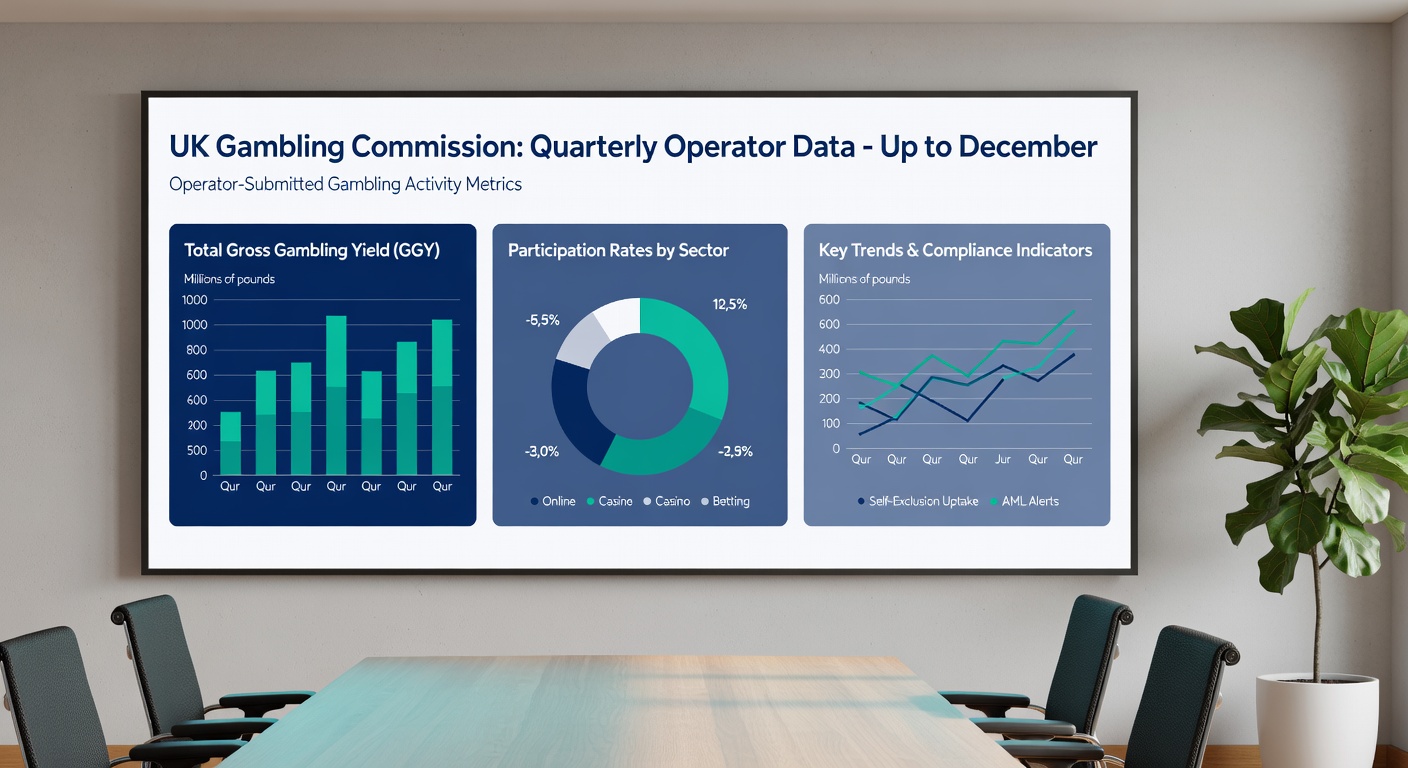
- Online GGY: £1.5 billion, down 2% YoY, post-stake limits.
- Slots GGY: £788 million, up 10%, record spins amid 16% fewer hour-plus sessions.
- Real event betting: £530 million, 18% decline.
- Betting premises: £549 million, 7% fall.
These bullets capture the essence, but the full dataset—submitted by licensed operators under Commission oversight—layers in session counts, demographic snapshots (where available), and yield per active player; for instance, slots players ramped up frequency, compensating for capped stakes through sheer volume, while bettors on events leaned conservative. And as of March 2026, with affordability checks ramping up alongside these limits, the Q4 data due soon could amplify or mute these patterns.
Take one case from the figures: slots spins hit all-time highs precisely when limits landed, showing adaptability; people who've analyzed similar post-regulation quarters often discover this bounce-back effect, where innovation in game design or marketing fills the gap left by restrictions. Yet betting's steeper slide reminds everyone that not all segments pivot equally, especially when live events underpin the action.
Context of Stake Limits and Market Adaptation
The April/May 2025 rollout of online slots stake limits—£5 max for over-25s, £2 for younger players—directly precedes this Q3 window, so data serves as the first major test of compliance and impact; operators integrated these swiftly, reprogramming thousands of titles, while the Commission gathered submissions to gauge behavioral responses. Figures reveal no mass exodus from slots, contrary to some early fears, but a reshaping toward higher-volume, lower-duration play that kept GGY rising 10%.
That's where the rubber meets the road for regulators in March 2026: with limits bedding in, upcoming affordability thresholds and stake reviews loom large, potentially extending curbs to other verticals if patterns like betting's 18% drop signal wider caution. Data indicates operators navigated the change without catastrophic revenue loss overall, though premises' 7% dip hints at spillover effects, where online shifts pull punters from bricks-and-mortar.
Experts poring over these stats highlight how record spins underscore player retention tactics working; short sessions align with harm-reduction aims, and while online GGY dipped modestly, the £1.5 billion mark remains robust against historical benchmarks. So now, as spring 2026 approaches with fresh events on the horizon, the ball's in the industry's court to sustain this equilibrium.
Conclusion
Q3 2025/26 operator data from the UK Gambling Commission lays bare a market in flux: online GGY at £1.5 billion after a 2% YoY dip, slots defying gravity with 10% growth to £788 million and record spins despite slashed long sessions, real event betting cratering 18% to £530 million, and premises easing 7% to £549 million—all shadowed by those pivotal stake limits from spring 2025. These figures, drawn from licensed operators' submissions, offer a factual benchmark as March 2026 unfolds with eyes on Q4; the trends point to adaptation over collapse, setting up pivotal discussions on what's next for stakes, sessions, and yields across the board. Observers await how this evolves, with data continuing to guide the path forward.