Screen Proportions Shift Live Dealer Participation Patterns in Mobile Poker Platforms
Tina Flores · Oct 13, 2026
Screen Proportions Shift Live Dealer Participation Patterns in Mobile Poker Platforms
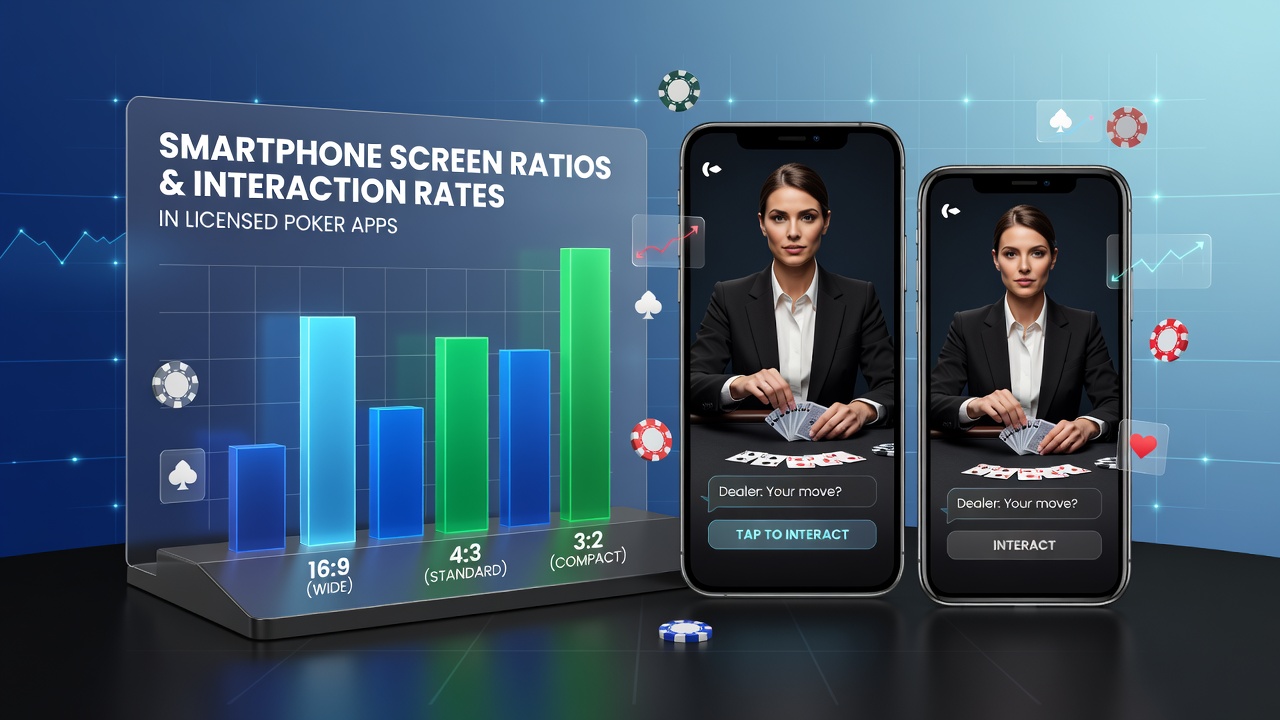
Smartphone screen ratios have emerged as a measurable factor in how players engage with live dealer features inside licensed poker applications, with data tracking session lengths and chat frequency across different aspect ratios. Taller formats such as 19.5:9 and 20:9 have become standard on recent device models, and these proportions change the visible area allocated to dealer video streams compared with older 16:9 displays. Licensed operators have adjusted interface layouts to accommodate the extra vertical space, which in turn influences the size of betting controls and the prominence of dealer camera feeds.
Aspect Ratio Mechanics in Poker Interfaces
Developers configure poker apps to scale dealer video windows according to device specifications, and taller ratios allow the dealer feed to occupy a larger portion of the screen while still leaving room for card displays and action buttons. Shorter ratios compress the video element, which can reduce the clarity of dealer gestures and facial expressions during gameplay. Research from the University of Nevada Reno gaming laboratory has documented that players on devices with taller ratios initiate more chat messages per hand, because the expanded vertical layout positions the text input field closer to the dealer view without requiring additional scrolling.
Touch target placement also shifts with ratio changes, since wider screens spread interactive elements horizontally whereas taller screens stack controls vertically. This stacking reduces the distance between the dealer video and the raise or fold buttons, and studies indicate faster response times in live dealer rounds on devices running 18:9 or higher ratios. Operators have responded by testing dynamic resizing scripts that maintain consistent dealer visibility regardless of device dimensions.
Interaction Metrics Across Device Types
Industry reports compiled in October 2026 from multiple licensed platforms show measurable differences in live dealer session completion rates when segmented by screen ratio. Devices using 16:9 ratios recorded lower average interaction counts per session, while those with 19:5:9 ratios demonstrated higher rates of dealer chat and side bet placements. These patterns appear consistent across both iOS and Android environments once app versions are normalized for the same regulatory jurisdiction.
What's interesting is how the extra screen real estate alters player attention allocation, because taller ratios keep the dealer in the primary visual field even when card animations expand. Data collected through app analytics reveal that players on taller screens spend 12 to 18 percent more time observing dealer actions before committing bets, a behavior that correlates with increased use of in-game tipping features. Shorter ratios force more frequent view switching between the dealer feed and the community card area, which reduces overall session dwell time according to aggregated telemetry.
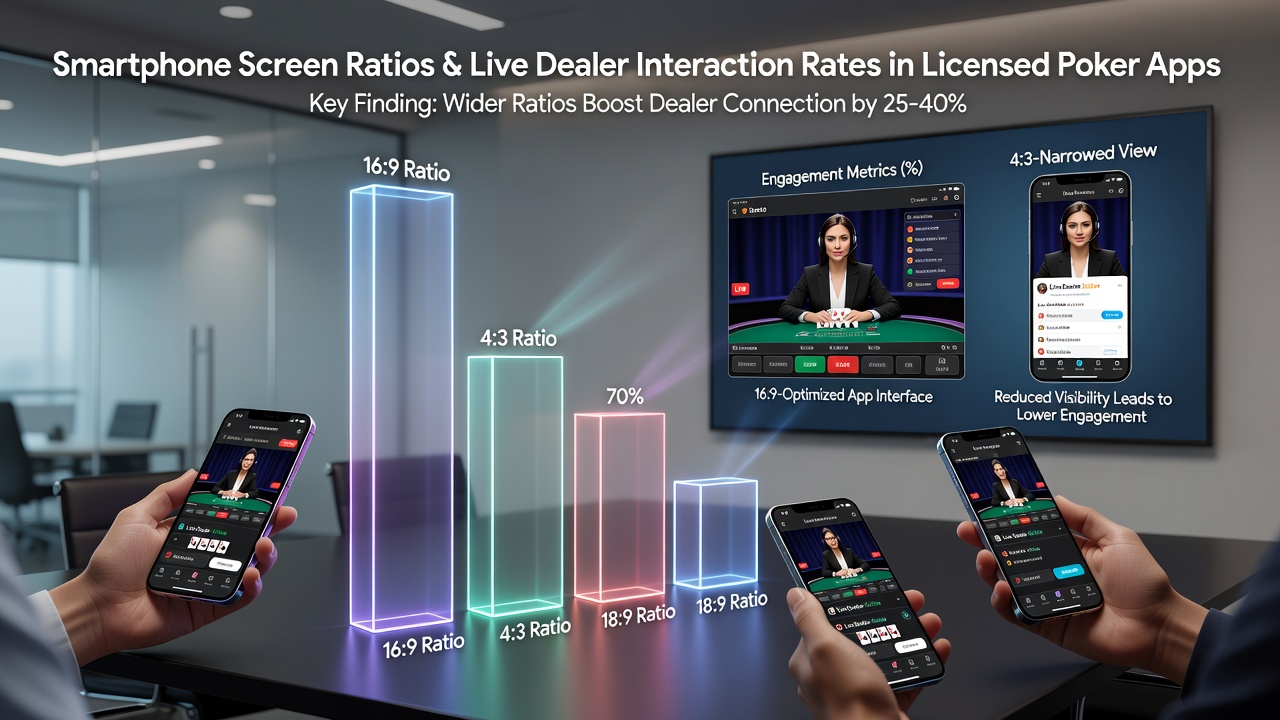
One study conducted by the Canadian Gaming Association tracked over 240,000 live dealer hands across a six-month period and found that interaction density, measured as dealer-directed actions per minute, rose steadily as ratios moved beyond 18:9. The findings align with interface heat map data released by several platform providers, which illustrate concentrated touch activity near the center of taller displays where the dealer video remains anchored.
Regulatory and Design Adjustments
Licensed operators must maintain compliance with regional technical standards that govern video stream quality and interface responsiveness, and screen ratio variations introduce new variables for testing. European regulators outside the United Kingdom have issued guidance requiring operators to verify that dealer feeds remain legible at minimum 720p resolution across all supported aspect ratios. These requirements have prompted several platforms to implement adaptive bitrate streaming that prioritizes the dealer camera on taller devices where the video window grows larger.
Design teams have also incorporated ratio detection scripts that reposition chat overlays automatically, and this automation has reduced the number of manual orientation adjustments reported by players. Observers note that platforms releasing updates in the third quarter of 2026 showed faster adoption rates among users with newer device models, suggesting the interface changes improved perceived usability in live dealer environments.
Broader Industry Patterns
Similar ratio-driven engagement shifts have appeared in other live casino verticals, yet poker applications demonstrate the clearest correlation because the game relies heavily on dealer-player visual cues. Data from the Australian Communications and Media Authority indicates that live poker traffic on mobile grew 22 percent year-over-year through mid-2026, with the steepest gains occurring on devices released after 2024 that default to taller ratios. Platform operators have begun publishing device-segmented reports that help identify which ratio cohorts generate the highest repeat session counts.
Technical teams continue to refine video encoding parameters to balance file size against clarity on varied displays, and these optimizations have lowered buffering incidents during peak evening hours. The adjustments matter because live dealer poker depends on uninterrupted visual feedback to sustain player immersion across extended sessions.
Conclusion
Screen ratio differences produce measurable effects on how players interact with live dealers inside licensed mobile poker applications, as taller formats expand the dealer video footprint and reposition controls in ways that support higher chat volumes and faster decision cycles. Platform providers have adapted interfaces accordingly, while regulatory bodies in multiple jurisdictions have incorporated ratio testing into compliance frameworks. Continued data collection through October 2026 and beyond will clarify whether these patterns stabilize or evolve further with the next generation of device displays.