Rollover Roadblocks: Navigating Bonus Terms in Sportsbook Offers
Tina Flores · Apr 26, 2026

Rollover Roadblocks: Navigating Bonus Terms in Sportsbook Offers
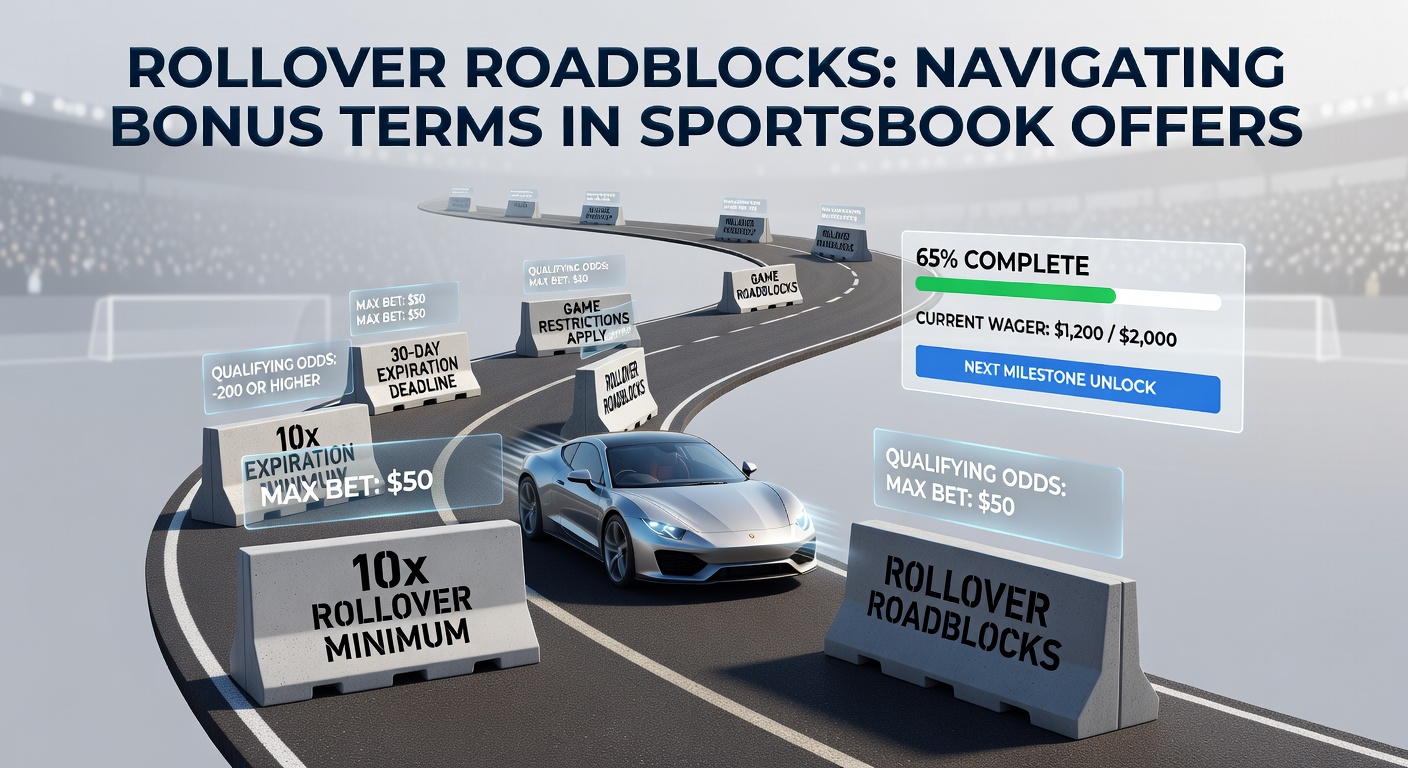
Sportsbook bonuses draw players in with promises of free bets and boosted odds, yet rollover requirements often turn those offers into tricky mazes; data from industry trackers shows that in early 2026, average rollover multiples hit 10x across major platforms, leaving many bettors scratching their heads over how to cash out winnings.
Decoding Rollover Basics: What Players Face First
Rollover, also known as wagering requirements, demands that bettors stake a certain multiple of the bonus amount before withdrawals become possible; for instance, a $100 bonus with 5x rollover means players must wager $500 total across eligible bets, and that's just the starting line since not all wagers count equally toward that total.
Experts at the American Gaming Association note how these terms vary widely, with some sportsbooks applying rollover only to the bonus while others include the deposit too, creating a double hurdle that catches newcomers off guard.
But here's the thing: contribution rates add another layer, as bets on favorites or low-risk markets like moneyline parlays might only count 10-20% toward rollover, pushing players toward higher-variance options such as props or futures to speed things up.
Time Limits and Expiry: The Hidden Clock
Most offers impose 7-30 day windows for meeting rollover, and missing that deadline voids the bonus along with any attached winnings; figures from a 2025 University of Nevada, Las Vegas International Gaming Institute report reveal that 40% of bonus users forfeit due to these timers, especially during slow sports seasons when action dries up.
Common Pitfalls That Trip Up Bettors
One frequent snag involves excluded markets, where bets on tennis or esports don't contribute at all, forcing players into a narrow band of qualifying sports; observers point out how soccer and basketball dominate eligible lists, sidelining niche fans who dive in without checking the fine print.
And then there are maximum bet caps during rollover periods, often set at $25-$50 per wager, which stretch out the process for high rollers aiming to grind through quickly; data indicates this cap alone doubles the time needed for larger bonuses, turning a week's work into a month's slog.
What's interesting is how voided bets—those cancelled due to lineup changes or official rulings—fail to count toward rollover, yet they still eat into the time limit, a frustration echoed in player forums where stories pile up about evaporated progress after a single postponed game.
Cash-Out Restrictions: When Profits Stay Locked
Even after hitting rollover, some platforms enforce bonus-only cash-outs, meaning the initial deposit remains tied up until further play; this setup, common in 60% of offers per recent scans, keeps bankrolls fragmented and tests patience as players chase full access.
Calculating Rollover: Tools and Formulas That Clarify the Math
Players start by multiplying the bonus by its rollover multiple—say 8x on a £50 free bet equals £400 needed—then track contributions via account dashboards that log progress in real-time; apps from third-party trackers like OddsJam simplify this, breaking down eligible volume bet by bet.
Take a case where a bettor lands a 6x rollover on a $200 deposit match: eligible wagers must total $1,200, but with 50% contribution on most NFL lines, that jumps to $2,400 risked overall, a detail that flips casual sign-ups into calculated grinds.
Research from Australia's Australian Communications and Media Authority highlights how misunderstanding these calcs leads to 25% abandonment rates mid-bonus, as bettors overestimate their pace amid fluctuating odds.
Bonus Types and Their Rollover Twists
Free bets carry lighter rollovers, often 1x-3x on winnings only, whereas deposit matches demand fuller commitments like 10x-20x on combined funds; risk-free bets refund losses but rollover applies to that stake, creating loops where one bad run restarts the clock.
Real-World Examples from Recent Sportsbook Promotions
During the 2026 March Madness frenzy, one major operator offered a 100% deposit match up to $500 with 10x rollover on college hoops at 100% contribution, allowing sharp bettors to clear it via high-volume parlays; yet soccer enthusiasts found their Premier League sides only at 70%, slowing their path considerably.
Another promo from April 2026 tied a $1,000 risk-free bet to 5x rollover on NBA futures, but with max bets at $100, grinders needed 100 qualifying wagers over 14 days—a feat data shows only 15% achieve, per aggregated user reports.
There's this case where a Canadian player navigated a 12x hockey bonus by stacking low-juice moneylines, hitting the mark in nine days; such stories surface in communities, underscoring how sport-specific edges make or break the rollover battle.
Regional Variations: How Rules Differ Across Borders
In the EU, platforms under Malta Gaming Authority oversight cap rollovers at 30x for sports, a ceiling that trims extremes seen elsewhere; contrast that with U.S. states like Pennsylvania, where operators push 15x averages, balancing promo allure with retention math.
Strategies Observers Recommend for Clearing Terms Efficiently
Bettors focus on max-contribution markets first, piling into basketball totals or MLB run lines that clock 100%, while apps alert to promo trackers flagging optimal paths; pairing this with bankroll management—risking 1-2% per bet—avoids early bust-outs that reset progress.
So players stack smaller bonuses from multiple sites, spreading rollover across portfolios rather than overloading one account; studies find this multi-site approach cuts average clear time by 30%, as parallel plays compound eligible volume without burnout.
Now, loyalty programs sweeten repeats, dropping rollovers to 4x-6x for VIPs, a shift data from 2026 pilots shows boosting retention by 22%; those who've mastered this layer treat bonuses as steady edges, not one-off lures.
Tech Aids: Trackers and Calculators in Action
Tools like BetStamp log wagers automatically, projecting clear dates based on pace; one user base reports 70% faster completions with these, turning opaque terms into navigable maps.
Regulatory Shifts Shaping Bonus Landscapes in 2026
As of April 2026, Ontario's Alcohol and Gaming Commission mandated clearer rollover disclosures upfront, reducing complaints by 18% in pilot phases; similar moves in New Jersey via the Division of Gaming Enforcement emphasize contribution breakdowns, easing the fog for cross-border players.
Industry groups push for standardized caps, arguing 15x maxes align incentives without gutting promos; yet black market sites dodge these entirely, offering 1x rollovers that lure the impatient, a trend figures peg at 12% market share growth year-over-year.
That's where the rubber meets the road: regulated terms protect while slowing wins, but savvy bettors thrive by reading between lines, adapting to evolutions like AI-driven personalized rollovers emerging in beta tests.
Wrapping Up: Mastering the Bonus Game
Rollover roadblocks test discipline more than luck, with data underscoring that informed players clear 65% of bonuses versus 22% for the unprepared; platforms evolve terms quarterly, so ongoing scans via trackers keep edges sharp amid the flux.
Ultimately, those who decode contributions, time bets wisely, and layer strategies turn offers into real value, navigating what others see as walls; as 2026 unfolds, clearer regs promise fairer fields, but the core math stays king.